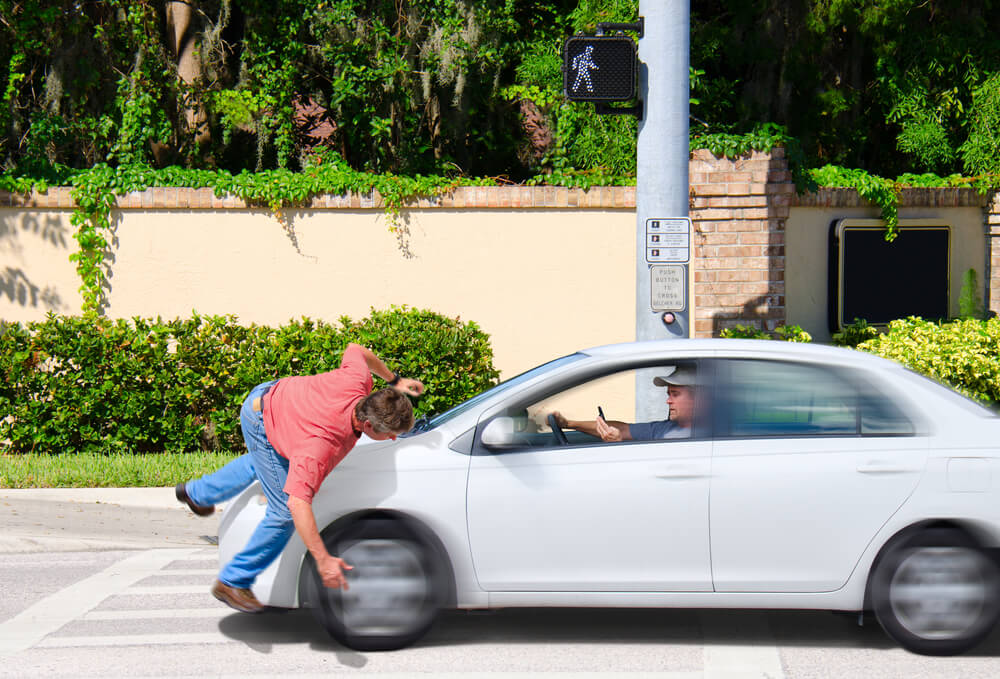
Pedestrian accidents in Atlanta can result in serious injuries that generate high medical bills for hospitalization, surgeries, prescription drugs, rehabilitation, and more. Pedestrian accidents tend to be even more dangerous than car accidents and truck accidents, and victims may suffer spinal cord injuries, traumatic brain injuries (TBIs), broken bones, and other catastrophic injuries. Victims often require expensive long-term care and cannot return to work, resulting in lost wages. Unfortunately, pedestrian accidents are common in Atlanta, and there are even many pedestrian deaths in the city each year. Often, pedestrian accidents are caused by the negligence of another party.
Injured pedestrians need an expert Atlanta personal injury lawyer, who will focus on seeking maximum compensation for all their losses. Nothing gets an insurance company’s attention like dealing with an Atlanta pedestrian accident lawyer who is prepared to take a case to court to pursue justice. With that sword hanging over their head, insurance adjusters often become much more willing to settle a claim for a fair sum.
If you or a family member was hit by a car while walking in Atlanta, you may be entitled to compensation for medical bills, lost wages, and pain and suffering. Georgia law protects pedestrians who are injured by negligent drivers, and a pedestrian accident lawyer can help you understand your rights and pursue a claim. Butler Kahn represents people seriously injured in pedestrian accidents throughout Atlanta and Metro Atlanta, and we prepare every case as if it’s going to trial.
What’s on this page
How Long Do I Have to File a Pedestrian Accident Case in Georgia?
You generally have two years from the date of a pedestrian accident to file a lawsuit in Georgia. This deadline comes from O.C.G.A. § 9-3-33, which governs the statute of limitations for personal injury cases in Georgia. Missing this deadline typically means losing your right to pursue compensation, so it’s important to speak with an Atlanta personal injury lawyer as soon as possible after an accident. The video below explains more details about this important deadline.
Who is at Fault for a Pedestrian Accident in Georgia?
Most pedestrian accident cases turn on the legal concept of negligence, which means someone failed to act as carefully as they reasonably should have. Pedestrian accidents frequently result from driver inattention, speeding, failure to yield, or impaired driving. A driver who strikes a pedestrian while texting, running a red light, or speeding through a neighborhood can be held liable for the injuries that result.
Determining fault in a pedestrian accident depends on several factors: the speed of the vehicle, whether the driver was distracted or texting, the presence of a crosswalk, lighting conditions, time of day, and nearby traffic signals. An experienced Atlanta pedestrian accident lawyer examines all these factors when building your case.
A Georgia pedestrian accident lawyer looks for several sources of evidence to determine who was at fault. Most pedestrian accident investigations start with the police report, which contains the officer’s observations and witness statements. In urban areas like Atlanta, surveillance cameras from nearby businesses may capture what happened, but an attorney must move quickly because most businesses overwrite their footage within days. Witness interviews are also critical—many witnesses remember more than they initially told the officer, or they may have only provided contact information at the scene.
If the driver who caused the pedestrian accident was drinking and driving or committed a hit-and-run, fault is usually clear. Drunk driving constitutes negligence per se under Georgia law, and fleeing the scene indicates the driver knew they were at fault and didn’t care about the pedestrian’s wellbeing.
Right-of-Way in a Georgia Pedestrian Accident Case
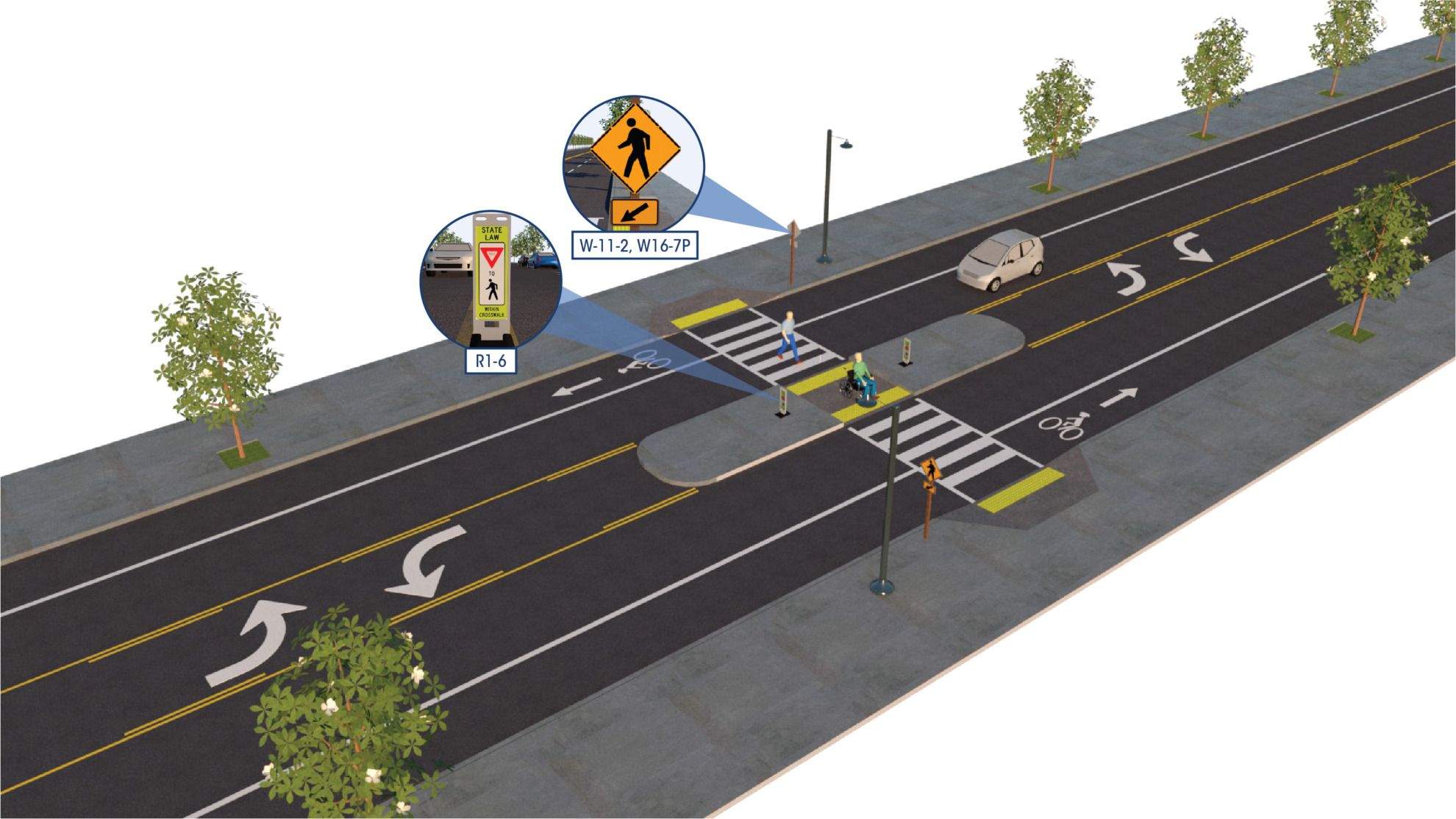
Pedestrians often have the right-of-way over vehicles under Georgia law. When a pedestrian crosses in a marked crosswalk, vehicles must yield. Under O.C.G.A. § 40-6-91, drivers must yield the right-of-way to pedestrians who are in a crosswalk on the same side of the street as the vehicle, or when the pedestrian is approaching and is within one lane of that side of the roadway.
Consider a street running east-to-west with two traffic lanes and one center turn lane. If a vehicle is heading east (in the lane on the southern side), a pedestrian in a crosswalk has the right-of-way if they are in that eastbound lane or in the center turn lane walking south toward the eastbound lane. In the illustration above, the man with a green shirt in the wheelchair has the right-of-way over any car approaching from the left (from his right), even though he is still in the center turn lane area.
Georgia law does place some limitations on pedestrian right-of-way. Under O.C.G.A. § 40-6-91(b), pedestrians cannot suddenly dart out in front of a moving vehicle without giving that vehicle time to stop. If a pedestrian crosses a roadway where an overhead crossing or tunnel is available, they should yield to vehicles on the street.
What if the Pedestrian is Not in the Crosswalk?
When a pedestrian accident occurs outside a crosswalk, determining fault depends on additional circumstances. Generally, vehicles have the right-of-way over pedestrians when there is no crosswalk. However, if the car was speeding excessively or driving at night without headlights, the analysis changes. Under O.C.G.A. § 40-6-92(a), a pedestrian can still have the right-of-way even without a crosswalk if they had “already, and under safe conditions, entered the roadway” before being struck.
Georgia’s comparative negligence rules also apply to pedestrian accidents. Even if a pedestrian is partially at fault for crossing outside a crosswalk, they may still recover compensation as long as they were less than 50% responsible for the accident. The compensation is reduced by the pedestrian’s percentage of fault.
What Compensation Can a Georgia Pedestrian Accident Lawyer Obtain?
When a driver negligently strikes a pedestrian in Georgia, the law requires the driver (or their insurance company) to compensate the pedestrian for all injuries caused by the accident. Pedestrian accidents often cause severe injuries because people on foot have no protection against a vehicle weighing thousands of pounds. The types of compensation available include:
Past Medical Bills. The at-fault driver or their insurance must pay for all medical expenses the pedestrian incurred from the accident, regardless of whether the pedestrian had health insurance. Medical treatment for pedestrian accidents frequently includes emergency room care, surgery, hospitalization, and rehabilitation.
Future Medical Bills. Serious pedestrian accidents often cause ongoing medical issues requiring future treatment. An Atlanta pedestrian accident lawyer may retain a specialist to create a “life care plan” projecting future medical needs and expenses. Pedestrian accidents commonly cause traumatic brain injuries and spinal cord injuries that require lifelong care.
Past Pain and Suffering. Being struck by a vehicle causes tremendous physical pain and emotional trauma. Georgia law entitles pedestrians to compensation for this suffering.
Future Pain and Suffering. If injuries require ongoing treatment, the pain is not over. Back injuries may never fully heal, and hardware like plates and screws may cause pain with weather changes. A pedestrian accident lawyer helps recover compensation for continuing pain.
Lost Wages. If the pedestrian misses work due to hospitalization or physical inability to work, they are entitled to compensation for those lost earnings. This includes both past lost income and future lost earning capacity if the injuries prevent returning to the same type of work.
Interference with Daily Living. Severe pedestrian accidents can permanently alter how a person lives. A spinal cord injury causing paralysis would put a pedestrian in a wheelchair for life. Georgia law recognizes that pedestrians deserve compensation when accidents fundamentally change their daily activities, hobbies, and relationships.
Insurance Coverage for Georgia Pedestrian Accidents
In serious pedestrian accident cases, the limiting factor on recovery may not be what the pedestrian deserves—it may be what funds are available. Georgia’s minimum auto insurance requirement is only $25,000, which is grossly inadequate for serious pedestrian injuries like amputations or traumatic brain injuries.
Georgia law allows multiple types of insurance to cover pedestrian accidents. Usually, the at-fault driver’s auto insurance pays first. If that coverage is insufficient, additional sources may include:
Personal Umbrella Policies. The at-fault driver may carry umbrella coverage that provides additional liability protection beyond their auto policy limits.
Employer’s Insurance. If the at-fault driver was working at the time of the accident, the employer may be liable under respondeat superior or vicarious liability principles. The business’s commercial general liability (CGL) policy may provide substantial additional coverage.
Uninsured/Underinsured Motorist (UM) Coverage. Surprisingly, a pedestrian’s own UM insurance can cover them even when they weren’t in a vehicle. Under O.C.G.A. § 33-7-11, UM policies of the pedestrian’s resident relatives may also provide coverage.
An experienced pedestrian accident attorney understands how to identify all available insurance and, in certain circumstances, may be able to force insurance companies to pay over their stated policy limits.
Hit-and-Run Pedestrian Accidents in Georgia
Georgia law treats hit-and-run accidents seriously. When a driver injures someone and flees the scene, it indicates both fault and callous disregard for the victim. Under O.C.G.A. § 40-6-270, leaving the scene after causing a collision is illegal. In Georgia, a driver who commits a hit-and-run may be liable for punitive damages—extra compensation designed to punish particularly bad behavior.
Hit-and-run collisions occur more frequently in pedestrian accidents than in car-to-car crashes. Experienced pedestrian accident lawyers believe this happens for two reasons: first, drivers know pedestrian injuries are likely severe, creating fear of prosecution or lawsuits; second, drivers know they can escape because pedestrians cannot chase the vehicle, and pedestrian accidents rarely damage the car enough to prevent it from driving away.
Pedestrian Rights Under Georgia Law
Because pedestrians are vulnerable road users with no protection against vehicles, Georgia law grants specific rights to protect them. Drivers must exercise “due care” to avoid pedestrians—even outside crosswalks. Key Georgia pedestrian laws include:
O.C.G.A. § 40-6-91: Pedestrians have the right-of-way in Georgia crosswalks
O.C.G.A. § 40-6-92: Pedestrians entering the roadway outside a crosswalk must yield unless they have “already, and under safe conditions, entered the roadway”
O.C.G.A. § 40-6-22: Pedestrians with the “WALK” signal have the right-of-way
O.C.G.A. § 40-6-144: Vehicles emerging from alleys, buildings, private roads, or driveways must yield to pedestrians on sidewalks
Pedestrian accidents often cause catastrophic injuries because the human body has no protection against a vehicle. Common injuries our Atlanta pedestrian accident lawyers see include:
Traumatic Brain Injuries (TBI). When a pedestrian is struck by a car, they often hit their head on the vehicle, the pavement, or both. Even a “minor” concussion can cause lasting cognitive problems. Severe TBIs cause permanent disability, personality changes, and may require lifelong care. Our Atlanta brain injury lawyers understand how to document and prove these injuries.
Spinal Cord Injuries. The force of a vehicle collision can fracture vertebrae or damage the spinal cord, causing partial or complete paralysis. Our spinal cord injury attorneys work with medical experts to project lifetime care costs.
Broken Bones and Fractures. Pedestrians commonly suffer fractures to the legs, pelvis, arms, and ribs. Compound fractures may require multiple surgeries and can lead to permanent limitations. Learn more about broken bone injury claims in Georgia.
Internal Organ Damage. Blunt force trauma from vehicle impacts can damage internal organs including the liver, spleen, and kidneys, often requiring emergency surgery.
Amputation. Severe pedestrian accidents can result in traumatic amputation at the scene or surgical amputation due to irreparable damage to limbs.
Burns. If the pedestrian becomes trapped under or near the vehicle, or if the vehicle catches fire, serious burn injuries can result.
Dangerous Pedestrian Areas in Atlanta
Atlanta’s mix of high-speed arterials, limited sidewalks, and heavy traffic creates dangerous conditions for pedestrians. Areas with high pedestrian accident rates include:
Peachtree Street: Atlanta’s main thoroughfare sees heavy vehicle and foot traffic, particularly in Midtown and Buckhead
Buford Highway: A notorious corridor with limited pedestrian infrastructure despite dense commercial activity and apartment complexes
Memorial Drive: High-speed traffic combined with bus stops and commercial destinations creates frequent pedestrian conflicts
Ponce de Leon Avenue: Heavy traffic near the Beltline crossings and commercial areas in Virginia-Highland and Poncey-Highland
Downtown Atlanta: The Five Points area, Centennial Olympic Park, and areas near Mercedes-Benz Stadium see high pedestrian volumes
Midtown: The arts district, Georgia Tech campus, and Piedmont Park area have significant pedestrian activity
Atlanta Pedestrian Accident Service Areas
Butler Kahn represents pedestrian accident victims throughout the Atlanta metropolitan area. Our Atlanta office serves clients in:
Atlanta Neighborhoods: Buckhead, Midtown, Downtown Atlanta, Brookhaven, Virginia-Highland, Inman Park, Old Fourth Ward, Grant Park, East Atlanta, Candler Park, Decatur, Druid Hills, West End, Westside, Atlantic Station, Castleberry Hill, and Cabbagetown.
Surrounding Cities: Sandy Springs, Dunwoody, Chamblee, Doraville, Avondale Estates, Tucker, Clarkston, Pine Lake, Stone Mountain, Smyrna, Vinings, Mableton, Austell, College Park, East Point, and Hapeville.
Counties: Fulton County, DeKalb County, Cobb County, Gwinnett County, and Clayton County.
We also have offices in Jonesboro, Lawrenceville, and Roswell to serve pedestrian accident victims across Metro Atlanta and throughout Georgia.
Frequently Asked Questions About Atlanta Pedestrian Accidents
Do I have a case if I was jaywalking when hit by a car?
Yes, you may still have a case. Georgia follows a modified comparative negligence rule, meaning you can recover compensation as long as you were less than 50% at fault. Even if you crossed outside a crosswalk, the driver may still bear significant fault for speeding, distracted driving, or failing to keep a proper lookout. Your compensation would be reduced by your percentage of fault.
Should I give a recorded statement to the insurance company?
No, you should not give a recorded statement without first consulting a pedestrian accident lawyer. Insurance adjusters are trained to ask questions that minimize your claim or establish fault on your part. Anything you say can be used against you later. Speak with an attorney first.
How much does it cost to hire Butler Kahn for a pedestrian accident case?
We handle pedestrian accident cases on a contingency fee basis, meaning you pay no attorney fees unless we recover compensation for you. The initial consultation is free, and we advance all case expenses. You pay nothing out of pocket.
What if the driver who hit me doesn’t have enough insurance?
Several additional sources of compensation may be available. Your own uninsured/underinsured motorist coverage can apply even though you weren’t in a vehicle. Policies of resident family members may also provide coverage. If the driver was working, their employer’s insurance may apply.
How long will my pedestrian accident case take?
Every case is different. Simple cases with clear liability and full recovery may settle in months. Serious injury cases requiring extensive medical treatment, or cases that go to trial, can take one to three years or longer. Learn more about how long personal injury cases take in Georgia.
What evidence is important in a pedestrian accident case?
Key evidence includes the police report, surveillance video from nearby businesses, photos of the accident scene, medical records, witness statements, cell phone records showing driver distraction, and vehicle data. Time is critical—surveillance footage is often overwritten quickly, and witnesses become harder to locate.
Can I sue if a pedestrian accident killed my family member?
Yes. Georgia’s wrongful death law allows surviving family members to bring a claim for the full value of the deceased person’s life, including their lost earning capacity, lost care and companionship, and the pain they suffered before death. A separate estate claim can recover medical bills and funeral expenses.
What if the driver fled the scene after hitting me?
Hit-and-run cases are still viable. Your own uninsured motorist coverage may pay your claim even if the driver is never found. If the driver is identified, they may face punitive damages for fleeing. We work with investigators to locate hit-and-run drivers using surveillance footage, vehicle debris, and witness information.
Do I need to see a doctor after a pedestrian accident?
Yes, always seek medical attention after a pedestrian accident, even if you feel fine initially. Adrenaline can mask serious injuries, and conditions like internal bleeding or brain injuries may not show symptoms immediately. Prompt medical documentation also strengthens your legal claim.
What if I don’t feel hurt right away after being hit by a car?
Some injuries, particularly brain injuries, soft tissue injuries, and internal injuries, may not produce immediate symptoms. You should still see a doctor promptly. Insurance companies often argue that delayed treatment means your injuries weren’t serious—early medical documentation prevents this argument.
Can I recover compensation if the accident happened in a parking lot?
Yes. Pedestrian accidents in parking lots, shopping centers, and private property are covered by Georgia law. Property owners may also share liability if dangerous conditions like poor lighting, inadequate signage, or blocked sightlines contributed to the accident. Our premises liability attorneys handle these complex cases.
What if I was hit while crossing at an intersection without a crosswalk?
Even without a marked crosswalk, you may have rights. Georgia law recognizes implied crosswalks at intersections. The driver still has a duty to exercise due care to avoid pedestrians. Fault will depend on factors like vehicle speed, visibility, traffic signals, and whether you entered the roadway safely.
Contact Our Atlanta Pedestrian Accident Lawyer
If you were injured in a pedestrian accident, we can’t take your pain away. What we can do is build a plan and fight to recover fair compensation for your losses. We have obtained favorable settlements and verdicts for victims of pedestrian accidents throughout Atlanta.
Time matters in pedestrian accident cases. Evidence like surveillance video disappears quickly, and witnesses become harder to locate. Choosing the right lawyer is important—if you call a law office and can’t get a lawyer on the phone, try someone else.
Our Atlanta Office
Butler Kahn – Atlanta Personal Injury Lawyers
10 Lenox Pointe
Atlanta, GA 30324
Phone: (678) 940-1444
Our Atlanta office is conveniently located near Buckhead and Brookhaven, with easy access from I-85 and GA 400. We serve clients throughout Fulton County, DeKalb County, and the greater Metro Atlanta area.
Contact Butler Kahn by calling (678) 940-1444 or contacting us online for a free consultation. We take pedestrian accident cases on contingency—no fee unless we win.
My father was in a serious motorcycle accident and unfortunately passed away soon after the accident. Butler Kahn firm in Atlanta was a true blessing
Read More
Samantha S.
Jeb and his team get great results for their clients! The team is hard working, organized, and very thorough. I have referred clients to them and he i
Read More