
We live in a great time for helping others.
Today we have better opportunities than ever before to make a meaningful difference in the lives of the people who need it most.
The difference is in the evaluation of effective charities. In the past, well-meaning donors struggled to identify charities that would put donations to good use. Donors had no way to distinguish a reliable, effective charity from an inefficient, ineffective, or fraudulent one. The few charity evaluators that existed relied on superficial analysis, rarely analyzed real-world results, and lacked the financial expertise to evaluate effectiveness on a per-dollar basis.
That has changed. With the effective altruism movement, bright minds from the financial and tech sectors have entered the philanthropic space. One of the most exciting results has been GiveWell, an organization founded by financial professionals who left Wall Street seeking to do something more meaningful with their lives. The organization they created engages in deep, data-driven analysis of charities that takes into account the need the charity serves, the efficiency with which the charity addresses that need, the charity’s ability to absorb and use more funding, and an analysis of the charity’s real-world results. GiveWell publishes, and continually updates, a list of Top Charities based on the charities’ ability to accomplish the most human good per dollar donated.
Every year since 2018, our firm has donated $100,000 to GiveWell’s Top Charities. We will do it again this year.

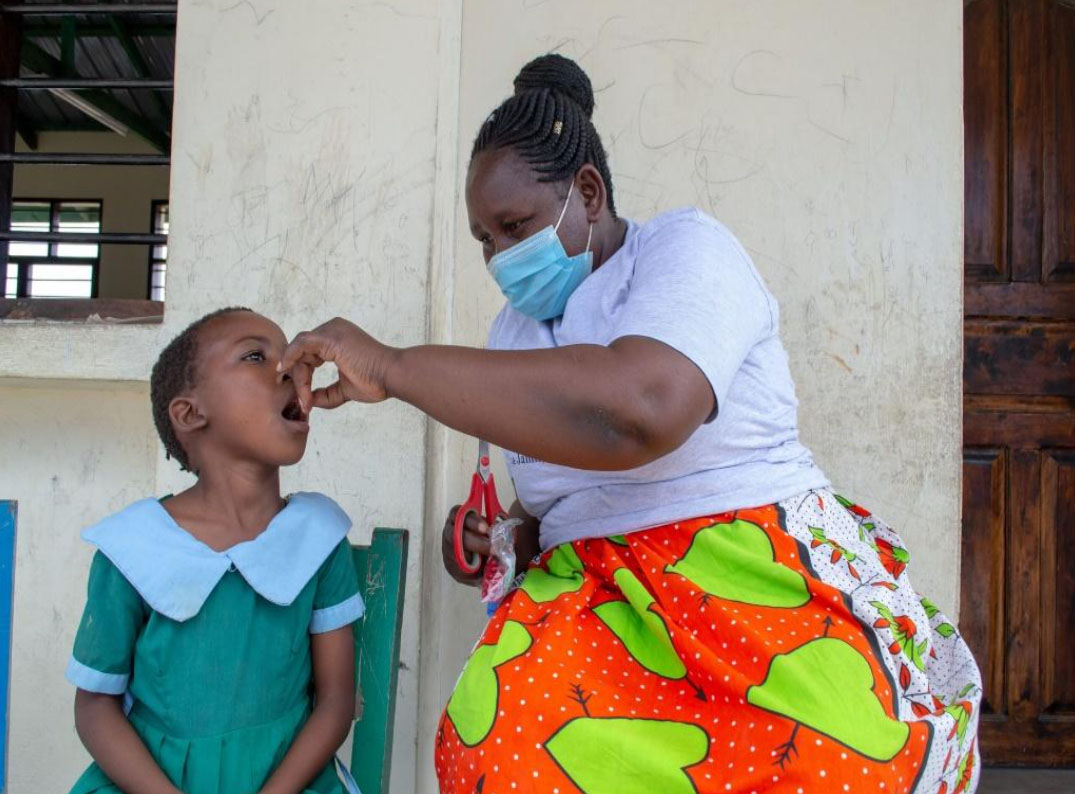
Every year since 2018, our firm has donated $100,000 among GiveWell’s Top Charities. We will do it again this year. We hope you will join us, either individually or through Smart Giving, an organization that seeks to coordinate effective giving in Georgia’s legal community.
We do give to those causes, although not in this amount. The reason that this money will probably go to the developing world is that we’re trying to get the most bang for our buck.
Money given to assist people in abject poverty can go a long, long way. In other words, it is the most cost-effective way to make a positive difference. Generally, seeking the maximum return for your dollar means giving money overseas because, for all of the serious problems we have in the United States, the problems in the developing world are more severe and comparatively cheaper to solve. Rampant malnutrition, river blindness, famine, and murderous civil wars are not common in the United States. In other places, they are.
Money goes farther in the developing world because the problems are worse. To use Peter Singer’s example, it costs about $40,000 to acquire a seeing-eye dog, train the dog, match the dog with a blind person in the United States, and train the person to work with the dog. Helping to provide seeing-eye dogs to blind people is good, of course. But we should also think about what else could be done with the money. In developing countries where people suffer from river blindness or trachoma, blindness can be cured for about $50. So if you’re looking to donate $40,000, you can either provide one blind person in the developed world with a seeing-eye dog, or cure fifty blind people in the developing world. We think that Singer made the point well here.
In his book The Life You Can Save, Singer argues that you can save a life in the developing world for $1,000 or less. We don’t mean to diminish the importance of domestic giving, but when it comes to our firm’s big give, we think we can do the most good for the most people by giving abroad. In parts of the developing world, a $5 mosquito net can be the difference between life and death.
LOL no.
We are comfortable, in that all five of the people who work at our firm have roofs over their heads, food on their tables, and no crushing needs. We also have mortgages or rent payments, and some of us have children to take care of. But an income of over $32,400 per year puts us in the top 1% of earners globally, and we think that statistic speaks volumes about the needs of others, particularly in developing countries. Somewhere, a mother is watching her child starve—if we can prevent that, we should.
Nope. We aren’t claiming to be icons of charity or moralistic philosophers, because we’re not.
We are trying to take a step in the right direction. The bottom line is that when we turn eighty and take a hard look in the mirror, we want to see somebody who made the world a better place. It won’t matter then whether we drove Ferraris or stayed in five-star resorts, but it will matter that we took our responsibilities as humans seriously.
We think lots of people have this question, but are afraid to ask it. We think it’s a reasonable question.
First, studies have shown that the best way to reduce population growth rates is by educating women in developing countries, where birthrates tend to be highest. (Click here for Singer’s explanation from his book The Life You Can Save, beginning at the word “Nevertheless . . .”) That is most definitely a type of giving that we would consider with this money.
Second, charities that address health conditions—such as those that address malnutrition, or work to prevent malaria—contribute indirectly to the advancement of education and society as a whole. On the most basic level, that’s because women don’t spend time in classrooms if their children are starving or dying of malaria. So you have to address problems like malnutrition or malaria before you can do meaningful work on education or social structure, which in turn leads to lower birthrates.
Third, some of the charitable causes that we’d consider—such as curing river blindness or repairing obstetric fistulae—don’t save lives directly, but do help people move from being nonproductive members of their communities to being productive members. That helps their communities and societies as a whole. That, in turn, is a good thing from a population perspective because more advanced, more sophisticated societies tend to have lower birthrates.
This is another question that we think lots of people have, but sometimes don’t ask because they don’t want to be impolite. We think it’s a good question.
We do give some time to charitable causes, as noted on our Community page, but we spend far more time practicing law. We think that’s a good decision because we’re better at practicing law than running charities, and by doing what we’re best at, we’re able to generate money that we can donate to people who are best at running charities. Those people can use the money efficiently, and can accomplish more good than we could if we tried to do their jobs.
 Contact Us Now







Lawrenceville, GA 30046


Jonesboro, GA 30236