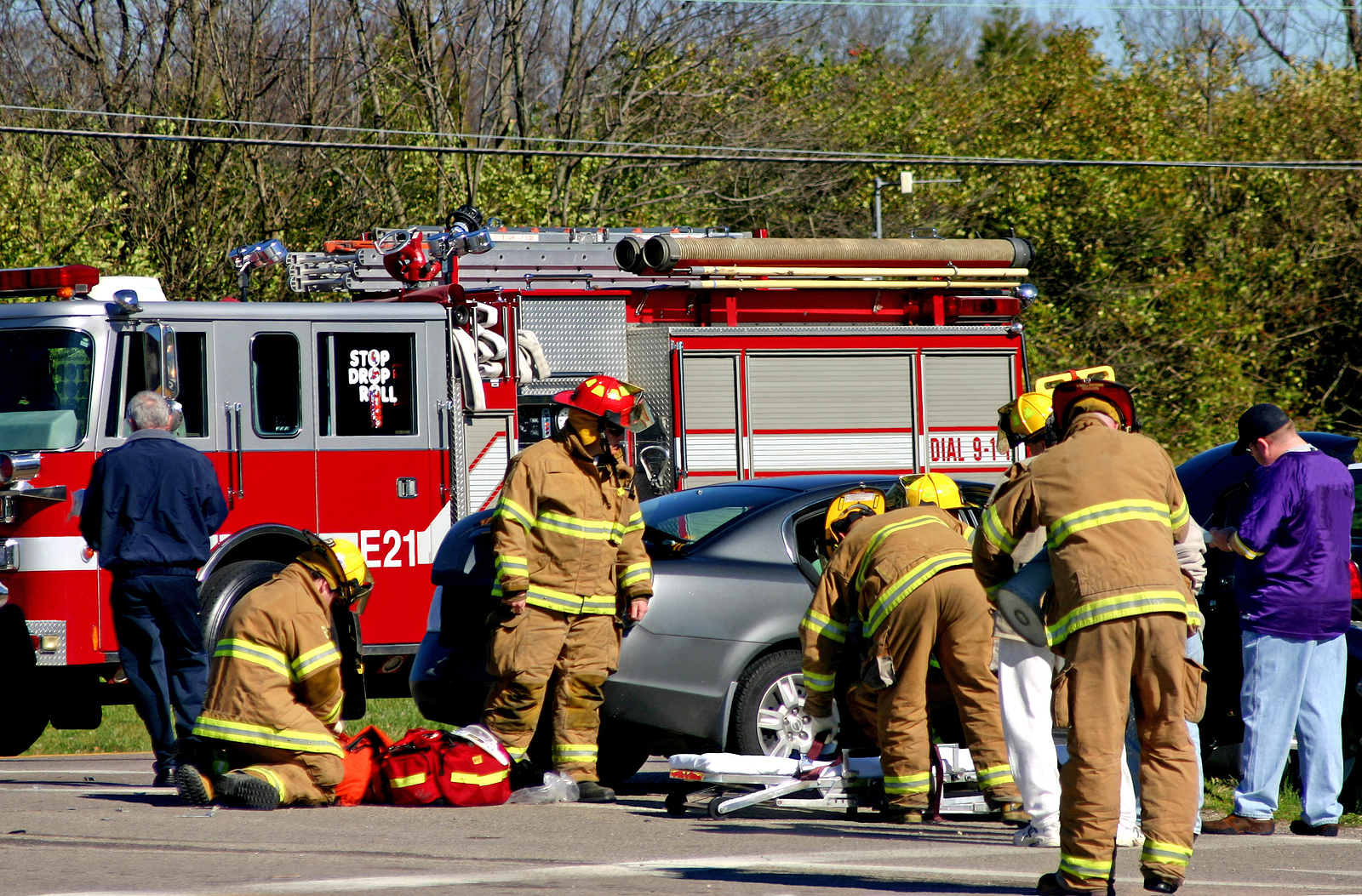
Accidents involving fire trucks, ambulances, and police vehicles are unlike typical motor vehicle collisions. When you are injured in one of these crashes, you are not only dealing with the immediate harm caused by a large and powerful vehicle but also with unique legal issues that arise when government entities and emergency responders are involved. In Atlanta and throughout Georgia, the law provides certain protections to emergency vehicle operators, but it also preserves your rights as an injured victim when negligence causes harm. Understanding these rules is critical if you or a loved one has been involved in such an accident.
Emergency vehicles are authorized to disregard certain traffic laws under specific circumstances. Georgia law, for example, allows drivers of authorized emergency vehicles to proceed past red signals, exceed the speed limit, or disregard certain rules of the road when responding to an emergency. This is outlined in Georgia Code § 40-6-6. However, the statute makes clear that this permission is not unlimited. Drivers of emergency vehicles must operate “with due regard for the safety of all persons.” They cannot act with “reckless disregard for the safety of others.”
This distinction matters. If you were injured because an emergency vehicle driver exercised these privileges reasonably while responding to an urgent call, the driver may not be legally at fault. On the other hand, if the driver failed to exercise due regard—such as by speeding through a red light without activating sirens or lights—the law may recognize that conduct as negligent.
Fire trucks and other emergency vehicles pose unique hazards on the road. These vehicles are larger and heavier than standard passenger cars, and they often carry significant momentum that makes it difficult to stop quickly. A fire engine loaded with water and equipment may weigh more than 40,000 pounds. When such a vehicle collides with a passenger car, the force of impact can cause catastrophic injuries.
The dangers are heightened by the way emergency vehicles operate. Drivers may move against the flow of traffic, travel through intersections against signals, or make sudden turns. Even with lights and sirens engaged, other motorists may not have adequate time or space to move over or otherwise react. Pedestrians and cyclists are at particular risk in these situations.
Georgia law provides important protections for those injured in collisions with emergency vehicles. While Georgia Code § 40-6-6 provides certain privileges to emergency drivers, it also imposes duties that can form the basis of a negligence claim when violated.
In addition, victims should be aware of Georgia’s sovereign immunity rules. Government entities, including city fire departments and police agencies, are generally shielded from liability unless immunity is waived. Fortunately, the Georgia Constitution and Georgia Code § 36-92-2 waive sovereign immunity for claims arising from the negligent use of a covered motor vehicle. This means that if a city-owned fire truck is negligently operated and causes injury, the victim may pursue a claim against the government entity within the limits allowed by law.
However, the statute imposes caps on damages. Under Georgia Code § 36-92-2, liability for a local government entity is capped at $500,000 per person and $700,000 per occurrence for bodily injury, and $50,000 for property damage. These limits are critical to understand when pursuing compensation.
To recover compensation, you must prove that the emergency vehicle driver or the entity responsible for the vehicle acted negligently. In Georgia, negligence requires showing a duty of care, a breach of that duty, causation, and damages. The duty of care is modified by Georgia Code § 40-6-6, but it is not eliminated. For example, if a fire truck driver runs a red light without sirens or lights activated, this may constitute a breach of duty. Similarly, if the driver was distracted, fatigued, or operating the vehicle in violation of departmental policies, this can also support a negligence claim.
Evidence is crucial in these cases. Accident reports, eyewitness statements, traffic camera footage, and expert reconstruction can all play a role in establishing liability. Additionally, fire departments and police agencies often maintain detailed logs and communication records that may provide insight into whether proper emergency protocols were followed.
The injuries sustained in collisions with emergency vehicles are often severe. Victims may suffer from traumatic brain injuries, spinal cord injuries, broken bones, and internal organ damage. The sheer size and speed of emergency vehicles make even “low-speed” collisions devastating. Recovery may involve extensive medical treatment, rehabilitation, and long-term care. These injuries also bring financial burdens, including lost wages and reduced earning capacity.
Under Georgia law, you are entitled to pursue compensation for these losses. This may include medical expenses, lost income, pain and suffering, and in some cases, punitive damages if the conduct was particularly egregious. However, the statutory caps mentioned earlier will limit recovery against government entities.
Bringing a claim after an emergency vehicle accident is not straightforward. Government entities and their insurers often raise defenses based on the urgency of the emergency or the immunity provisions of Georgia law. They may argue that the driver’s conduct was reasonable under the circumstances. Moreover, strict procedural requirements apply. Under Georgia Code § 36-33-5, injured parties must provide written notice of claims against a city within six months of the accident. Missing this deadline can bar your claim entirely.
Because of these complexities, pursuing legal action requires careful navigation of the statutes and strict adherence to procedural requirements. An experienced attorney can guide you through this process and ensure your rights are preserved.
If you are injured in an accident with a fire truck or other emergency vehicle, your first priority should be obtaining medical treatment. Beyond that, it is important to document the incident. Obtain a copy of the police report, gather contact information for witnesses, and take photographs of the scene and your injuries if possible. Do not delay in consulting with an attorney, as important deadlines may apply, and evidence can quickly be lost.
If you or a loved one has been injured in an accident involving an ambulance, fire truck, or police car in Atlanta, you need an attorney who understands both the human impact of these accidents and the complex laws that apply. At Butler Kahn, we have experience representing victims in cases involving government entities and emergency vehicles. We know how to gather the evidence, challenge defenses, and pursue the compensation you deserve under Georgia law.
You do not have to face this process alone. If you have questions about your rights or are unsure how the law applies to your situation, we are here to help. Contact Butler Kahn by calling (678) 940-1444 or contacting us online for a free consultation. A truck accident lawyer can review the facts of your case, explain your options, and help you make informed decisions about your next steps.